Play With the river
Service Design
·
Innovation Design
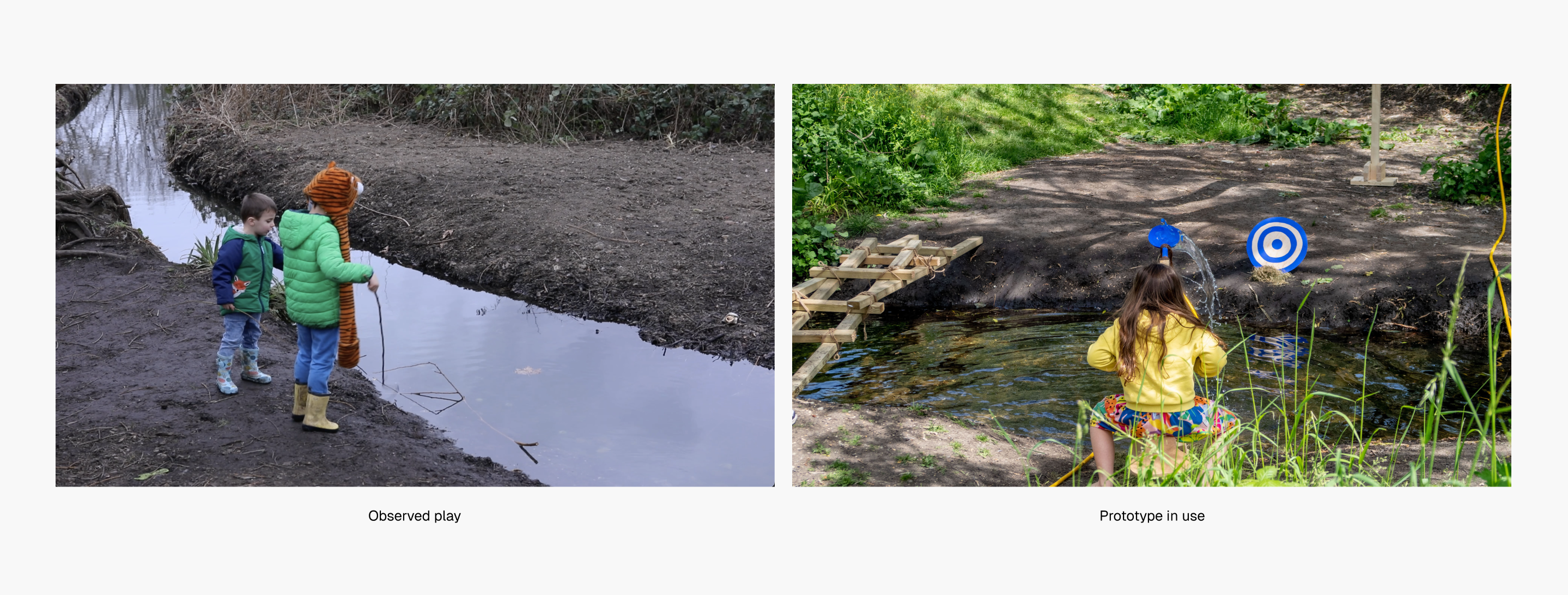
In this project we’re trying to bring the playground back to the environment and inspire the kid to have more interaction with river, combining play and river. We drew attention to how play is limited, and how the river is a resource for more rewarding types of play.
Opening Events
London River week 2023 (Representing Goldsmiths)
|
Canal Dream 2023, London
Finding play beyond the playground
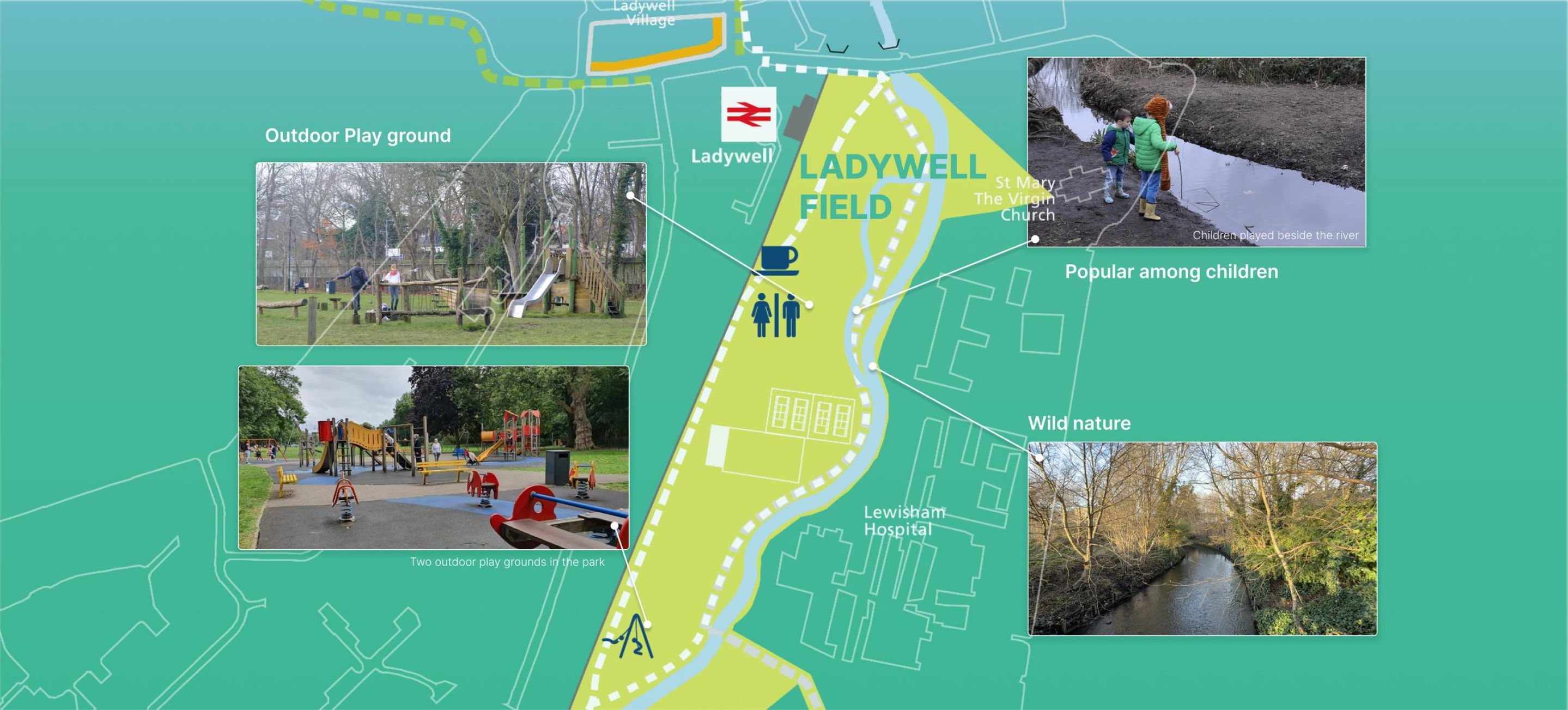
Ladywell Field is a public park located in the Lewisham community in South London. The park features open grassy areas, with the River Ravensbourne flowing through it. It is abundant with wild plants and landscapes, along with two playgrounds situated in the center of the grassy areas. Due to the park's lush greenery and natural landscapes, children are often play in the natural areas. The contrast between the playgrounds far from the river and the nature-loving children has drawn our attention.
Capturing spontaneous play
Observation of children’s behaviors in park.
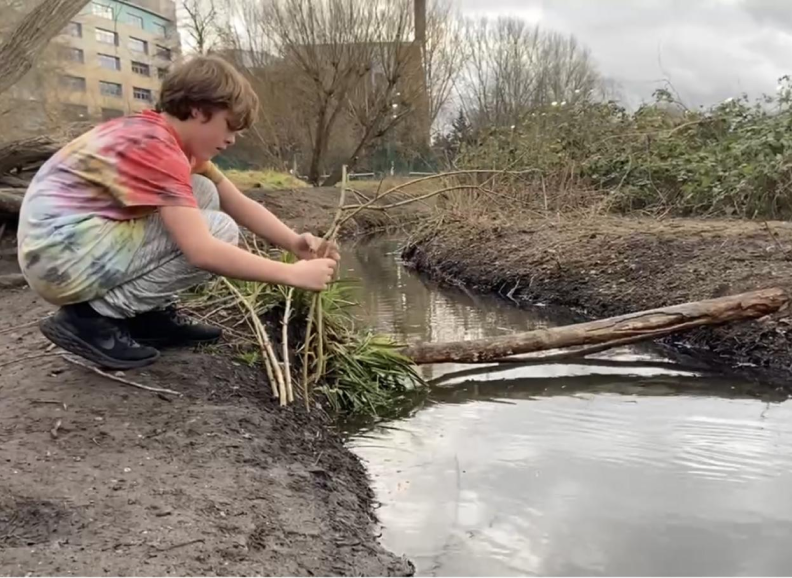
We found children spontaneously building bridges with natural wooden branches along the narrow man-made canal on more than one occasion. The actions of the children, made us began to contemplate the allure of the river to people and how the river's accessibility affects the way children interact with the river/nature.
The boy’s mom told us, “He really loves the water, and I can feel that being in a natural environment can make him very calm. I'm very willing to take him out into nature.”
Capturing spontaneous play
Observation of children’s behaviors in park.
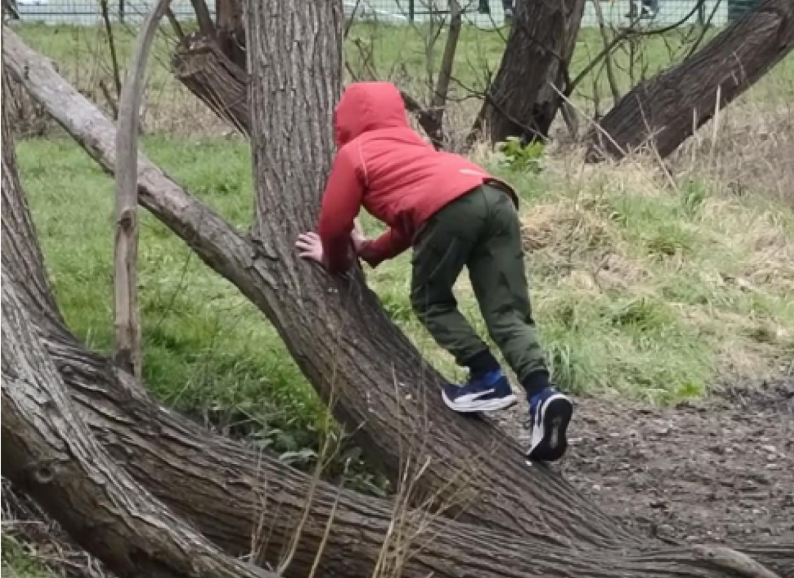
Children are active, and they use the low tree trunks along the riverbank for activities such as climbing and playing hide and seek. They don't require formal game rules and will even spontaneously use the surroundings as their 'toys.'
Capturing spontaneous play
Observation of children’s behaviors in park.
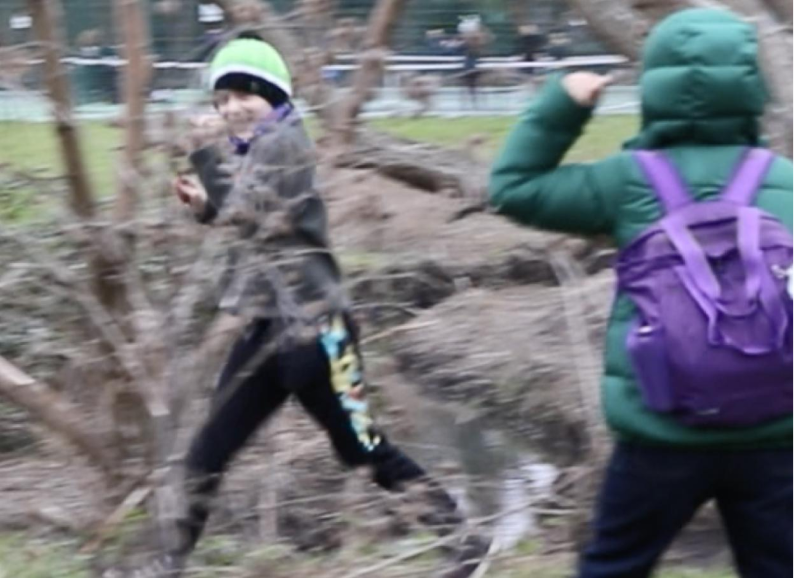
A child invited us to join a chasing game he had invented, using seeds for throwing. From the children's activities, it can be seen that they don't like being confined to the same space. Therefore, our future design space should be an expandable open area.
Making the river part of the game
“ With the rise of safety standards, liability lawsuits and a general commercialisation of public space, playgrounds have become yet another expression of a society obsessed with standardisation, control and helicopter parenting. GABRIELA BURKHALTER
We wondered why play parks are far from the river, and trying to bring the river and play together. Our project will also drew attention to how to add risk to the playground, how to link existing rides to what we are going to create. We aim to design a novel playground located by the river, allowing direct interaction with the river, connecting both sides, and featuring various play facilities.
Experiment & Prototyping
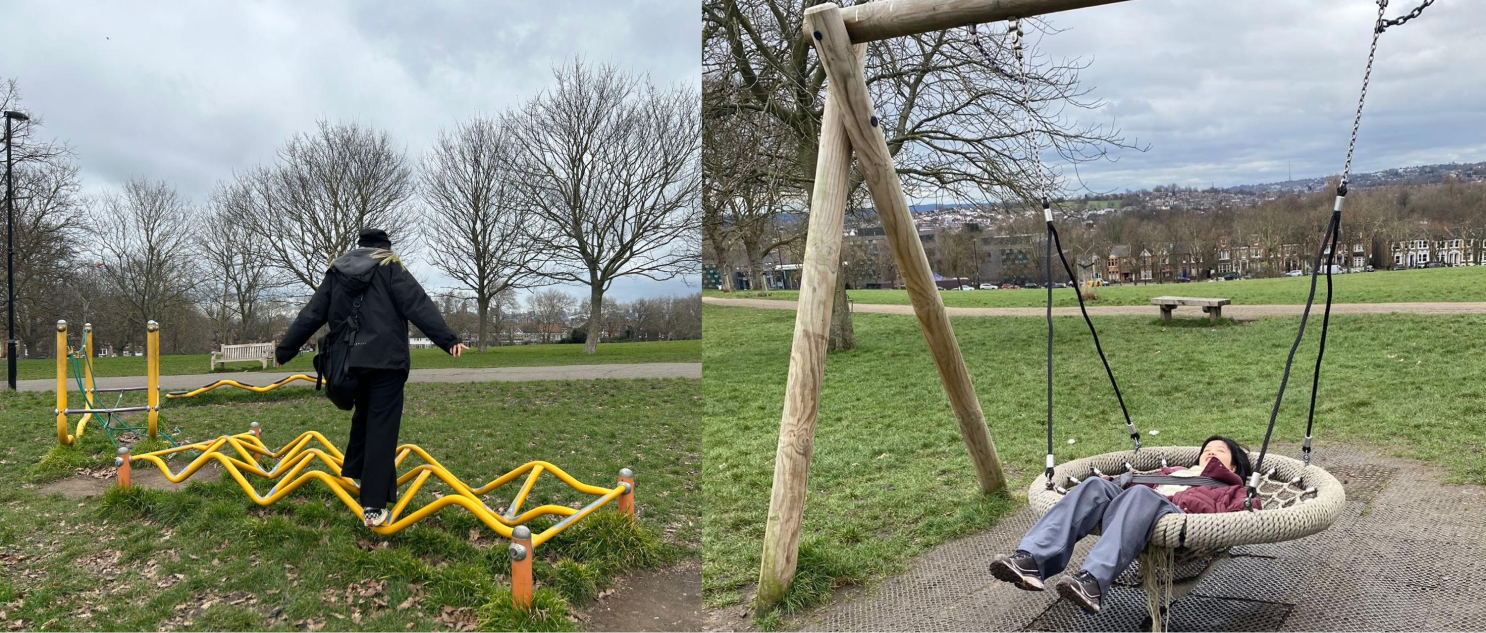
We visited many playgrounds in London, experienced the existing play equipment, and contemplated how to add more fun and how to connect them with water.
Experiment & Prototyping
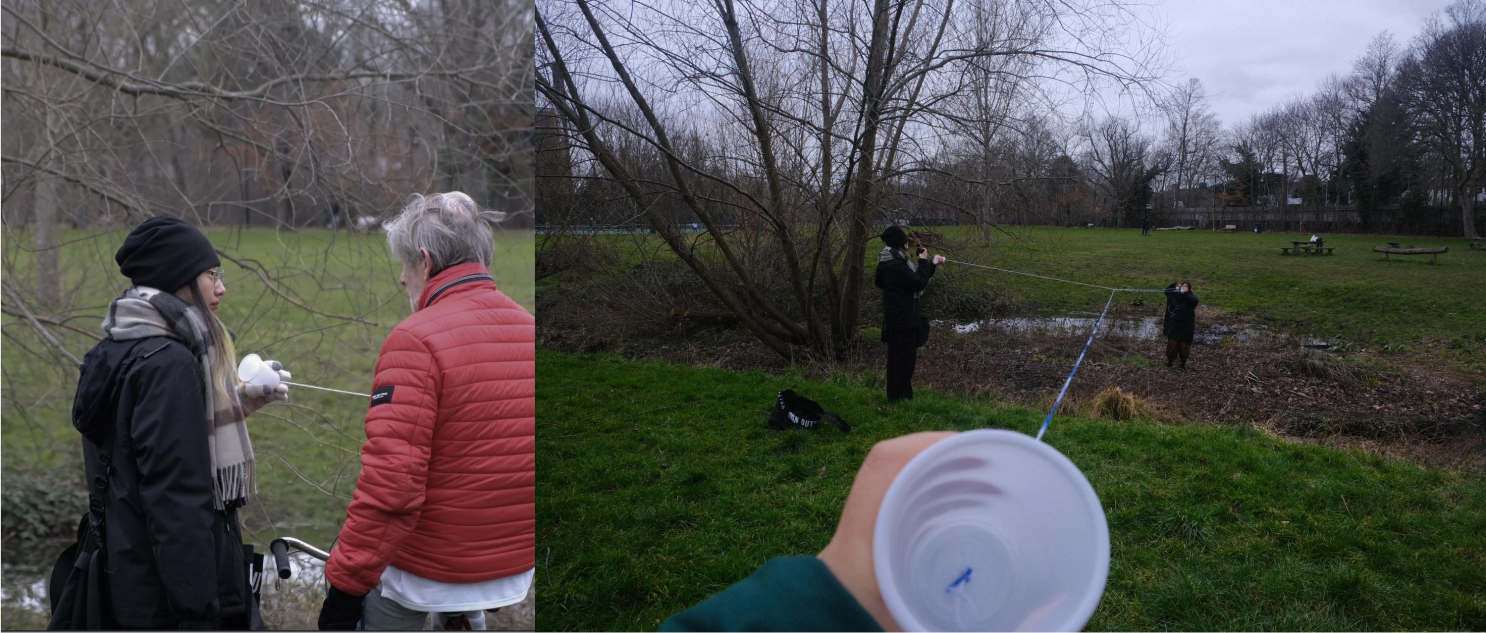
We created primitive microphones and speakers. We attempted to connect people on both sides of the river, just as the river connects different areas. This experiment attracted many passersby.
Experiment & Prototyping
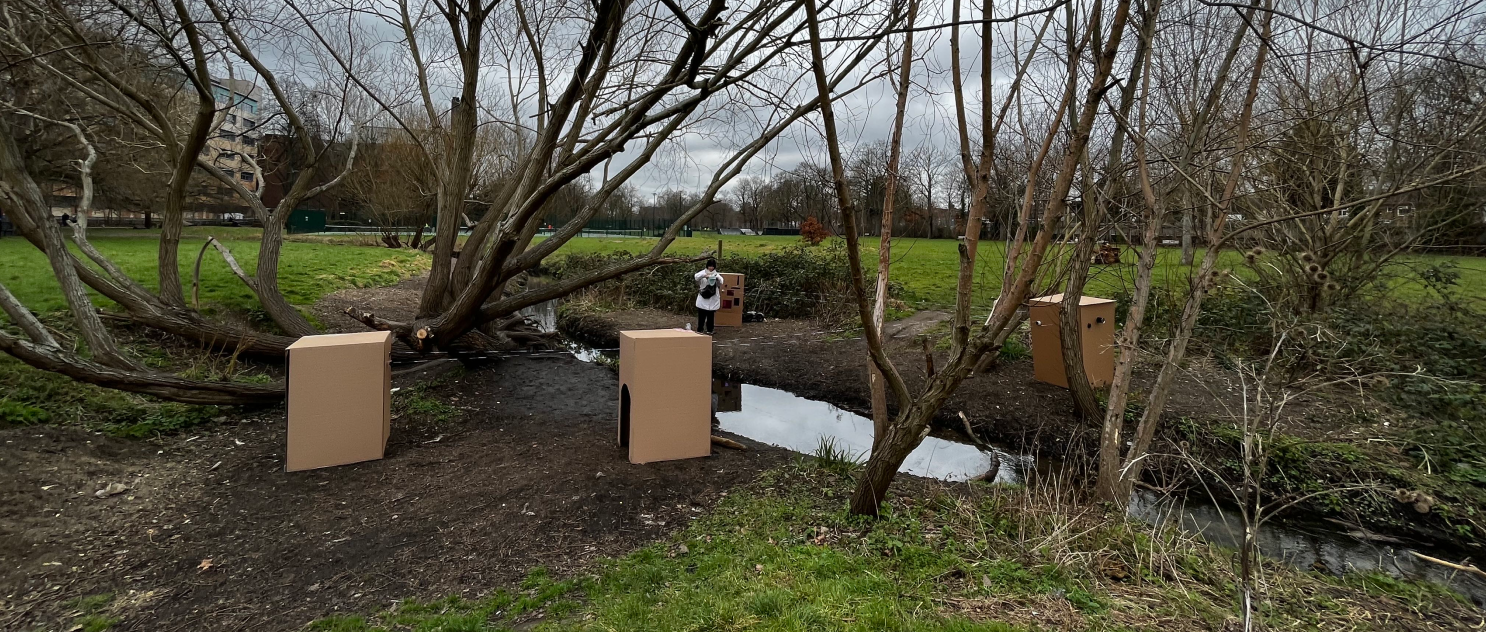
There were some failed attempts in the course of our experiments. For example, we tried to create new playgrounds by masking other senses to achieve special sensory amplification, and in this attempt we completely ignored the importance of nature in our project.
Experiment & Prototyping
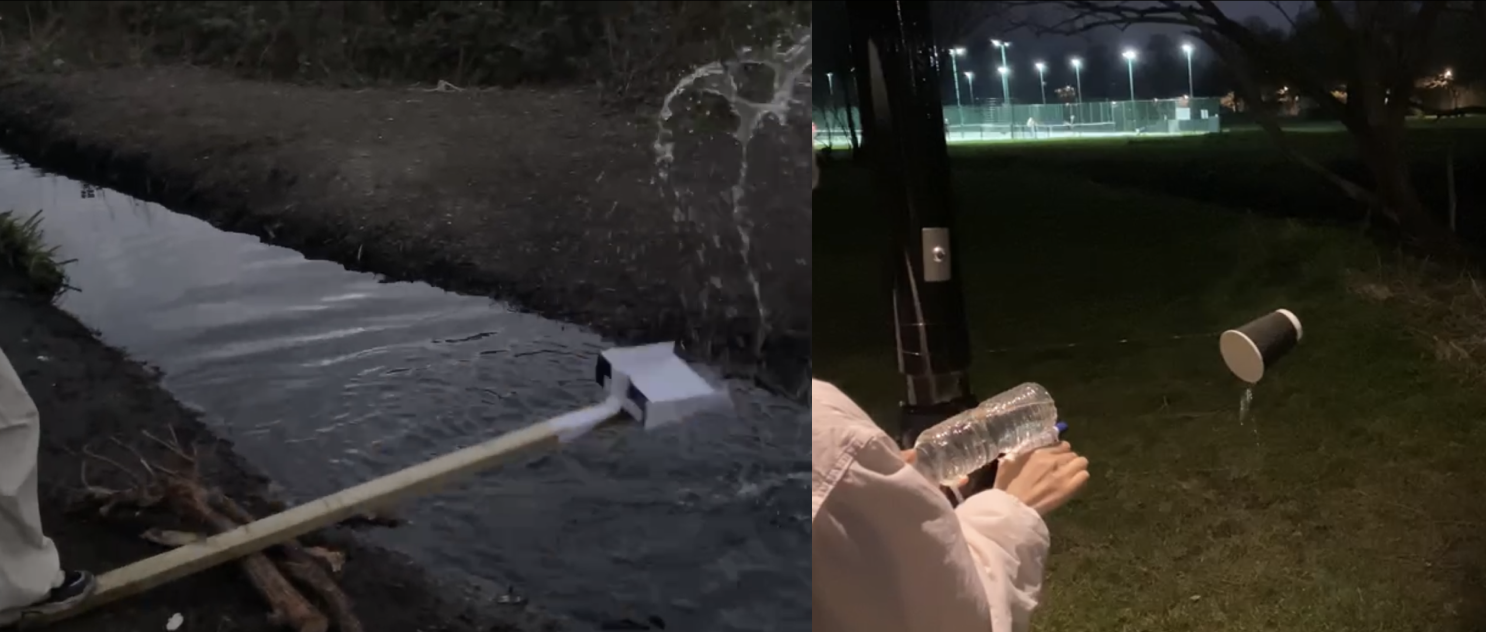
Before we started making it we experimented briefly in the park to confirm the usability and actual size of the seesaw. We also tested the water pipe sound and other games.
Experiment & Prototyping
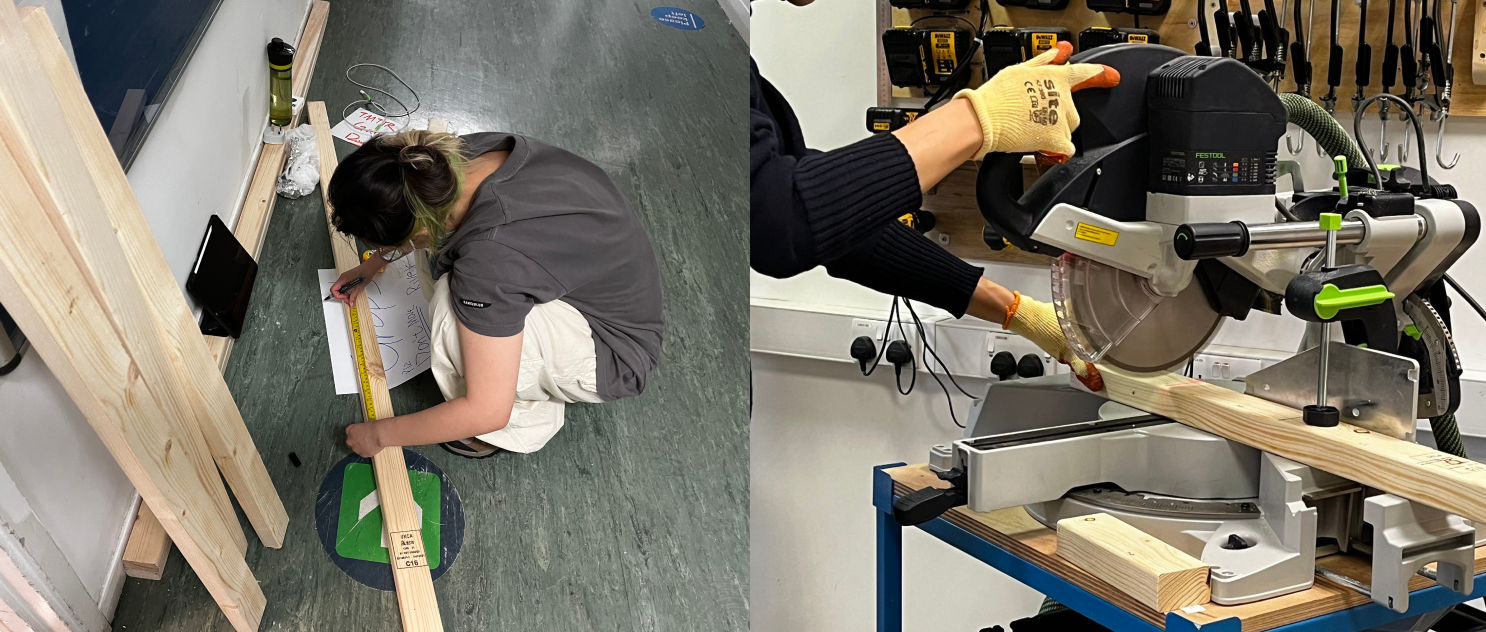
All play structures were designed and built by our team in the lab, following relevant playground safety guidelines.
Industrial Design
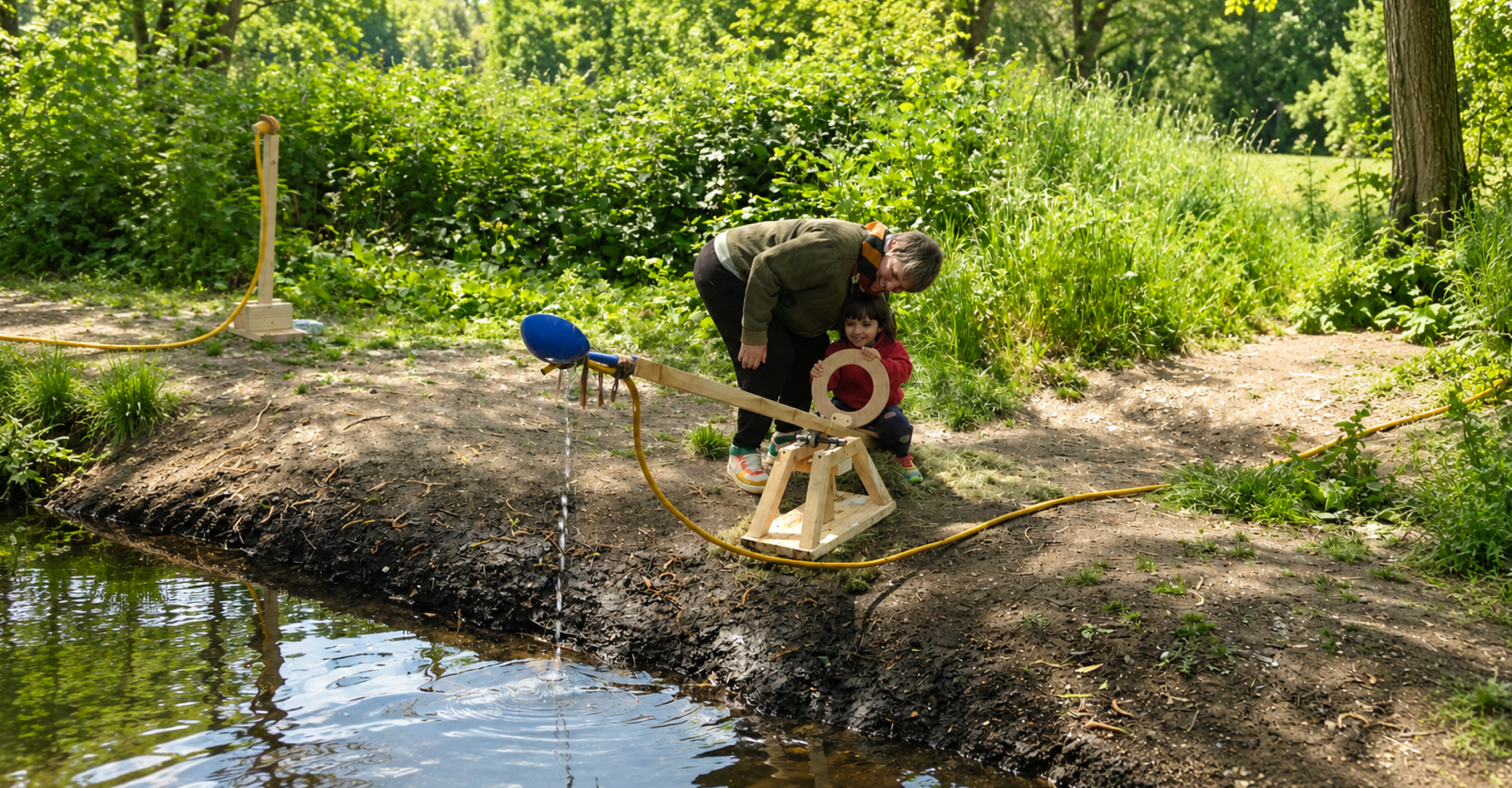
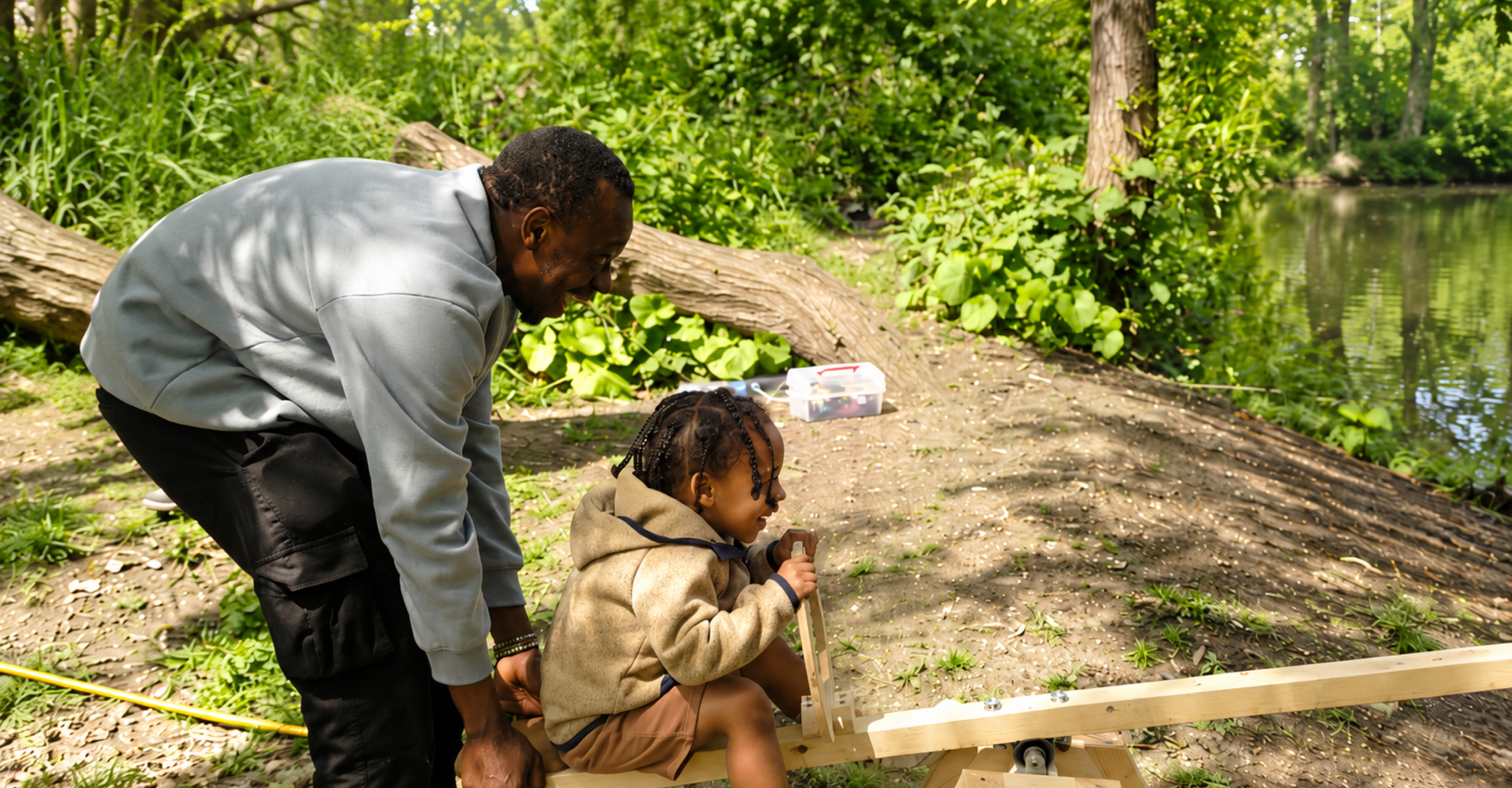
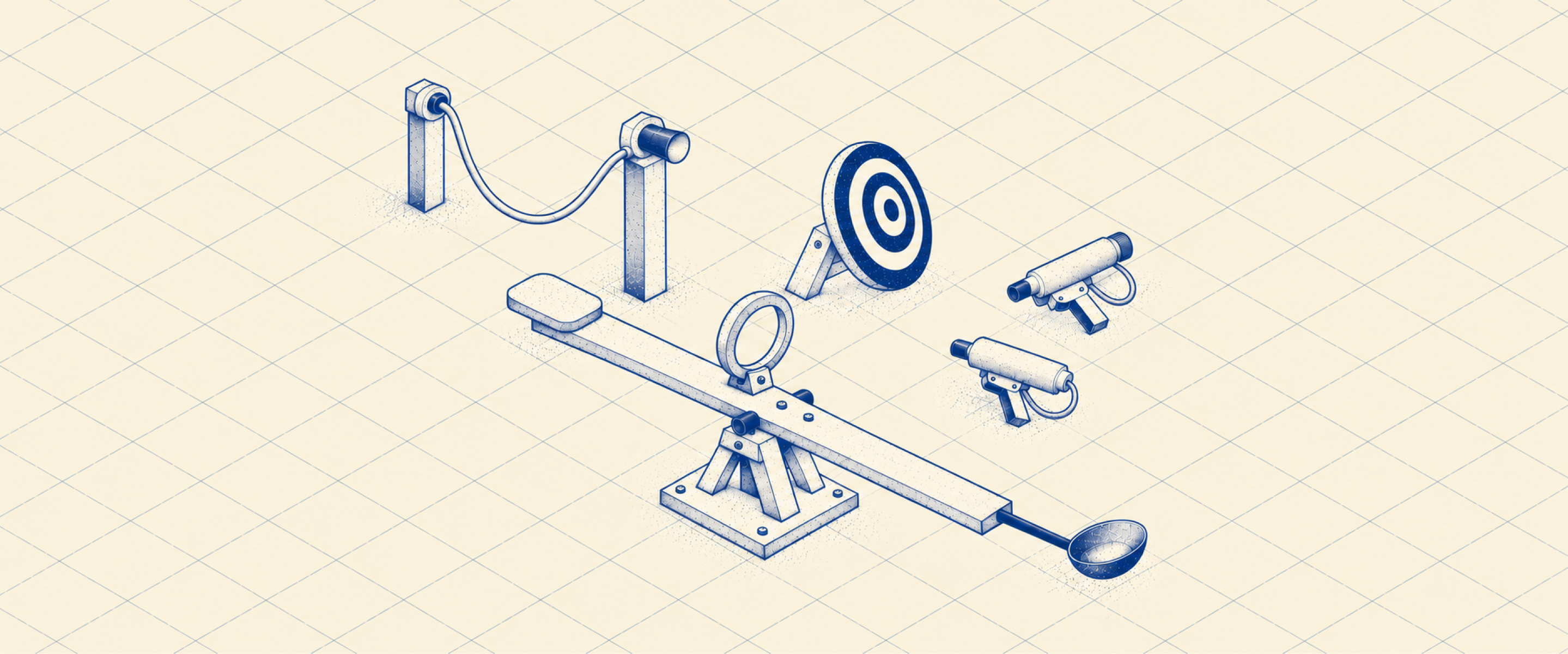
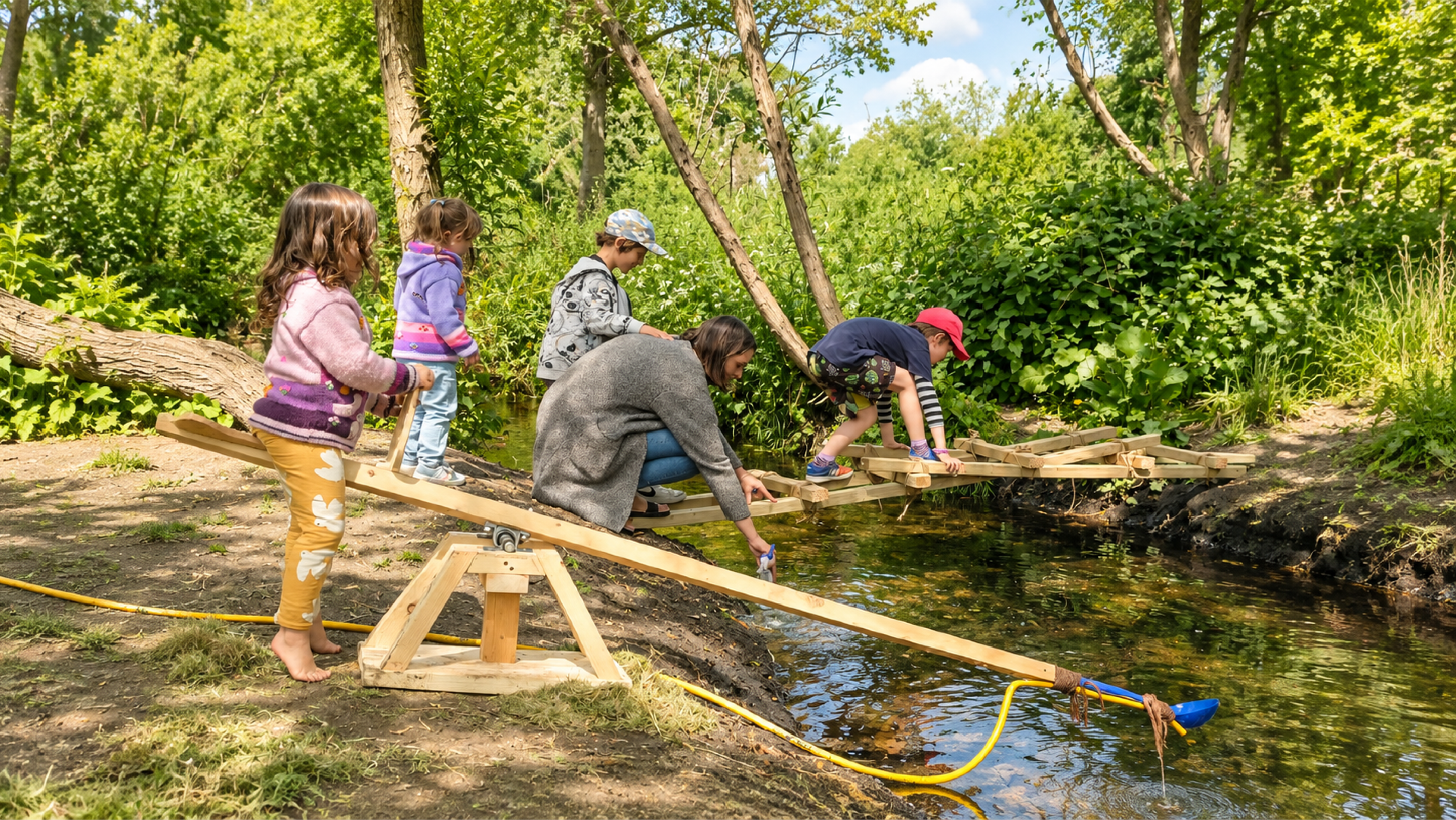
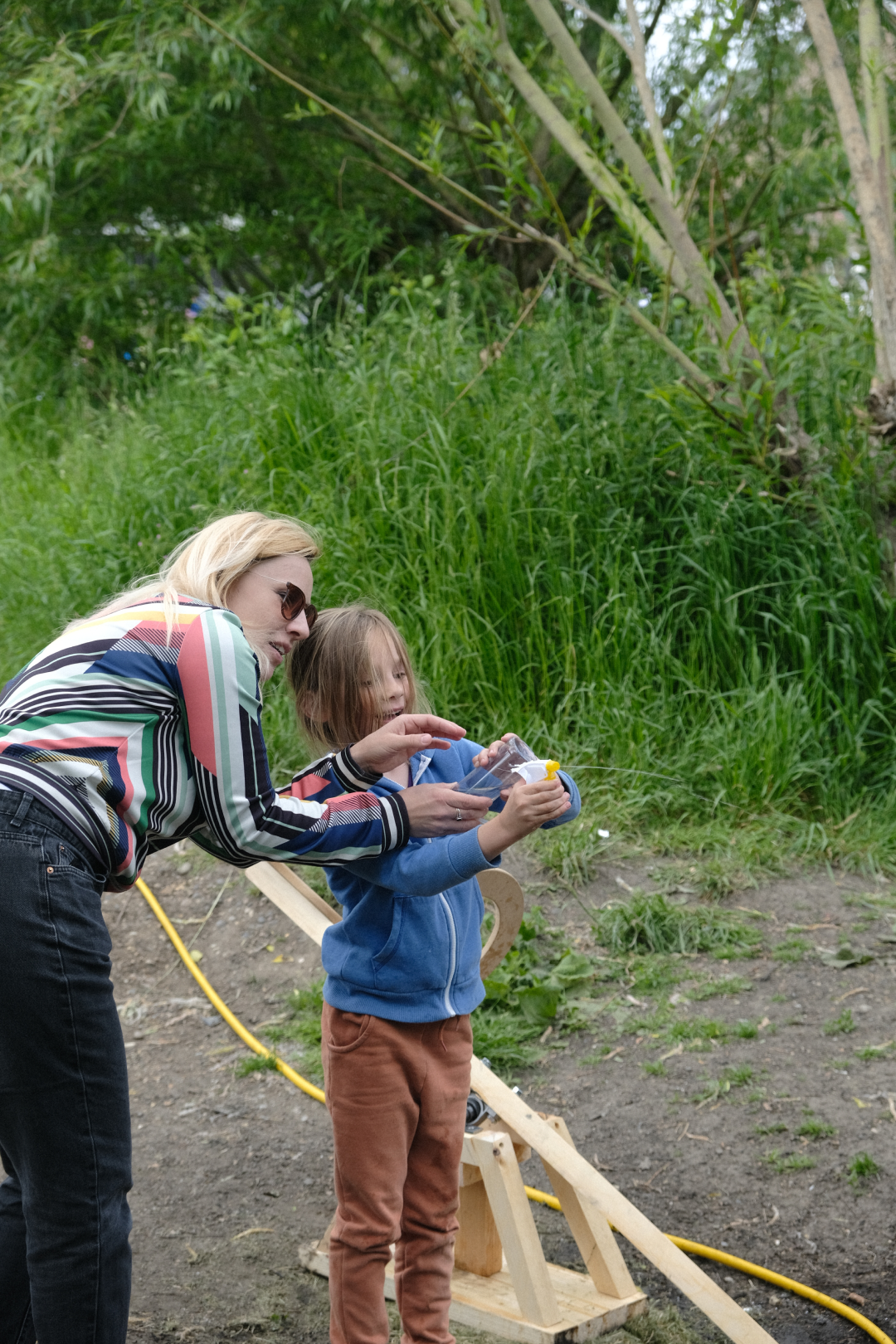
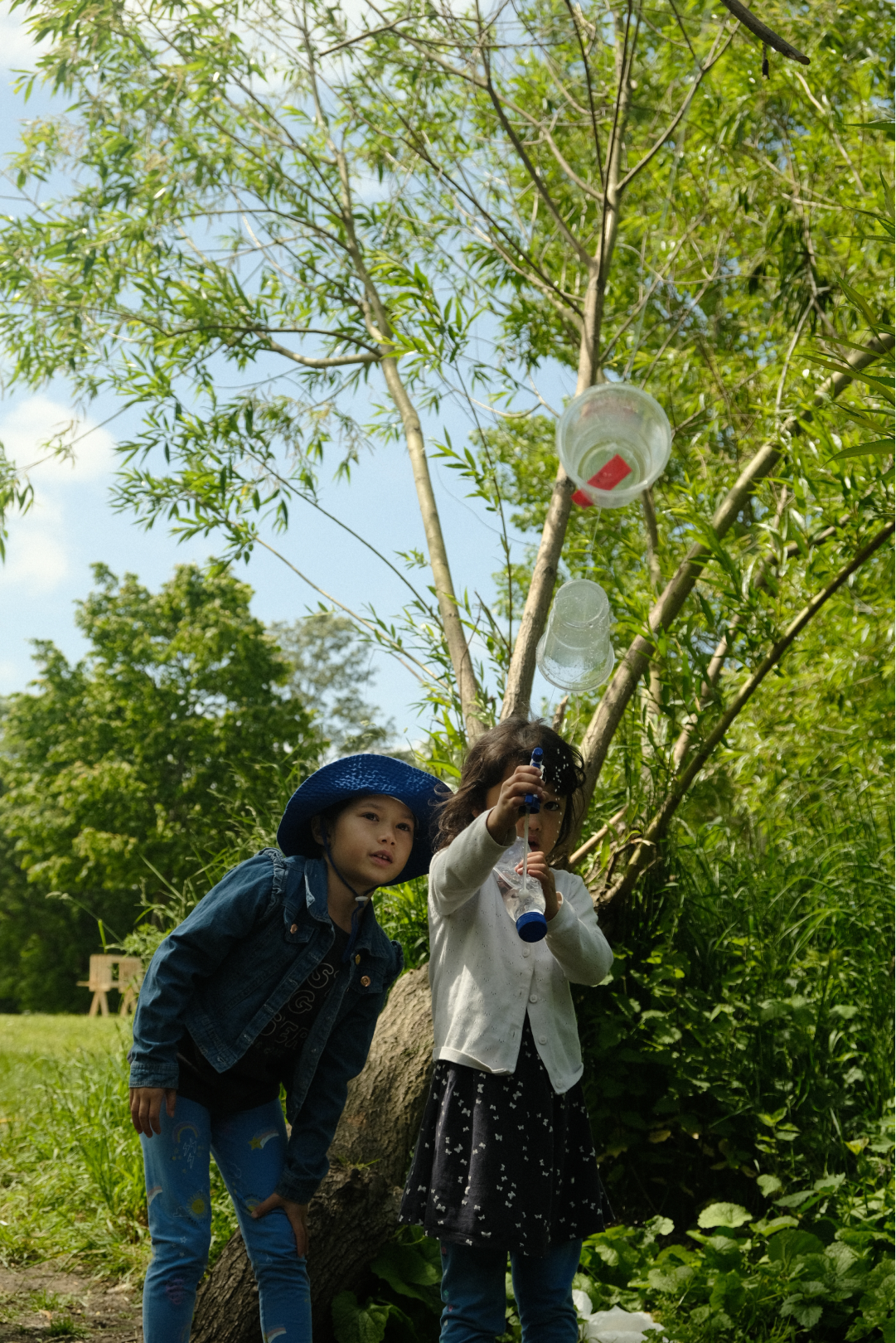
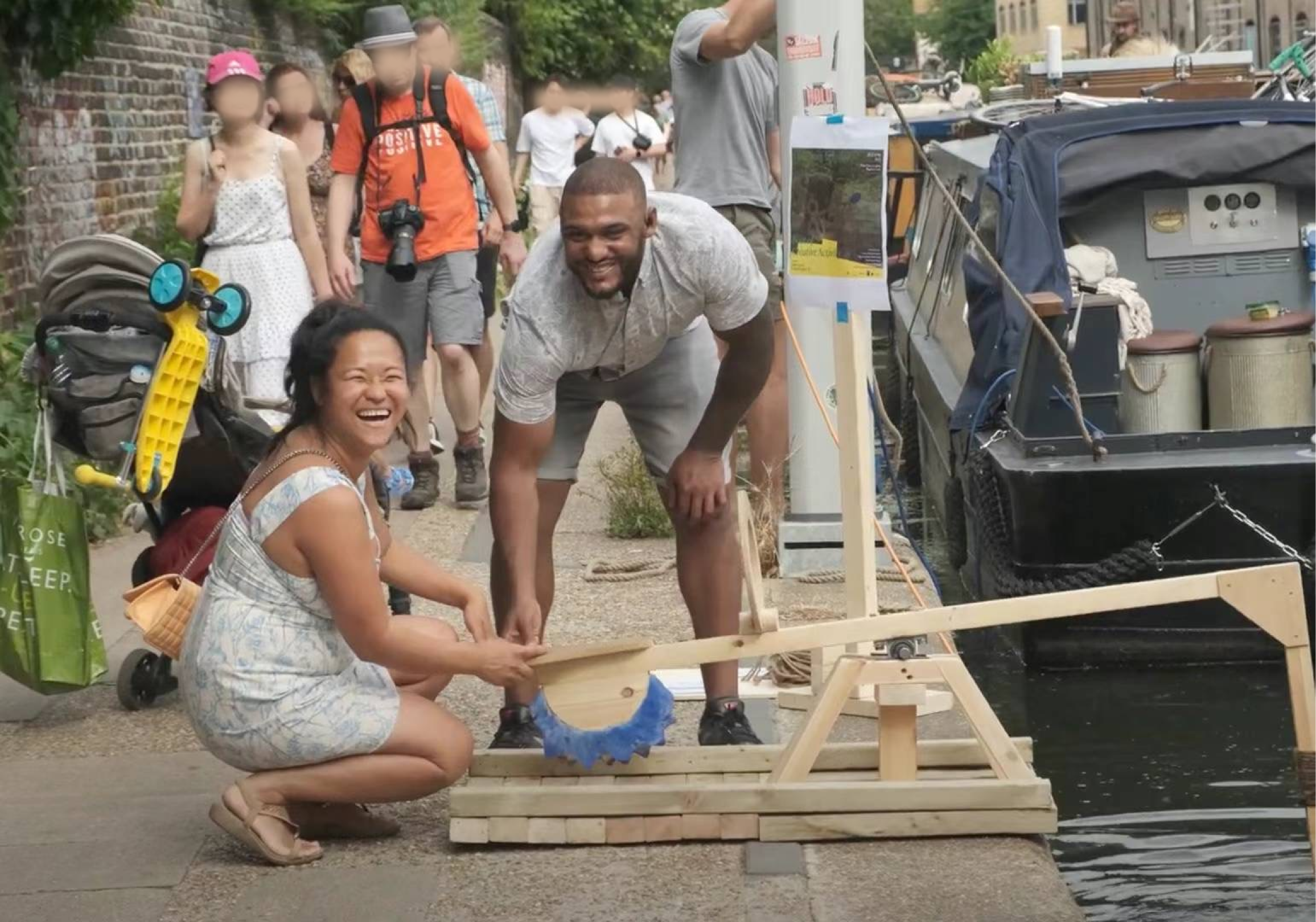
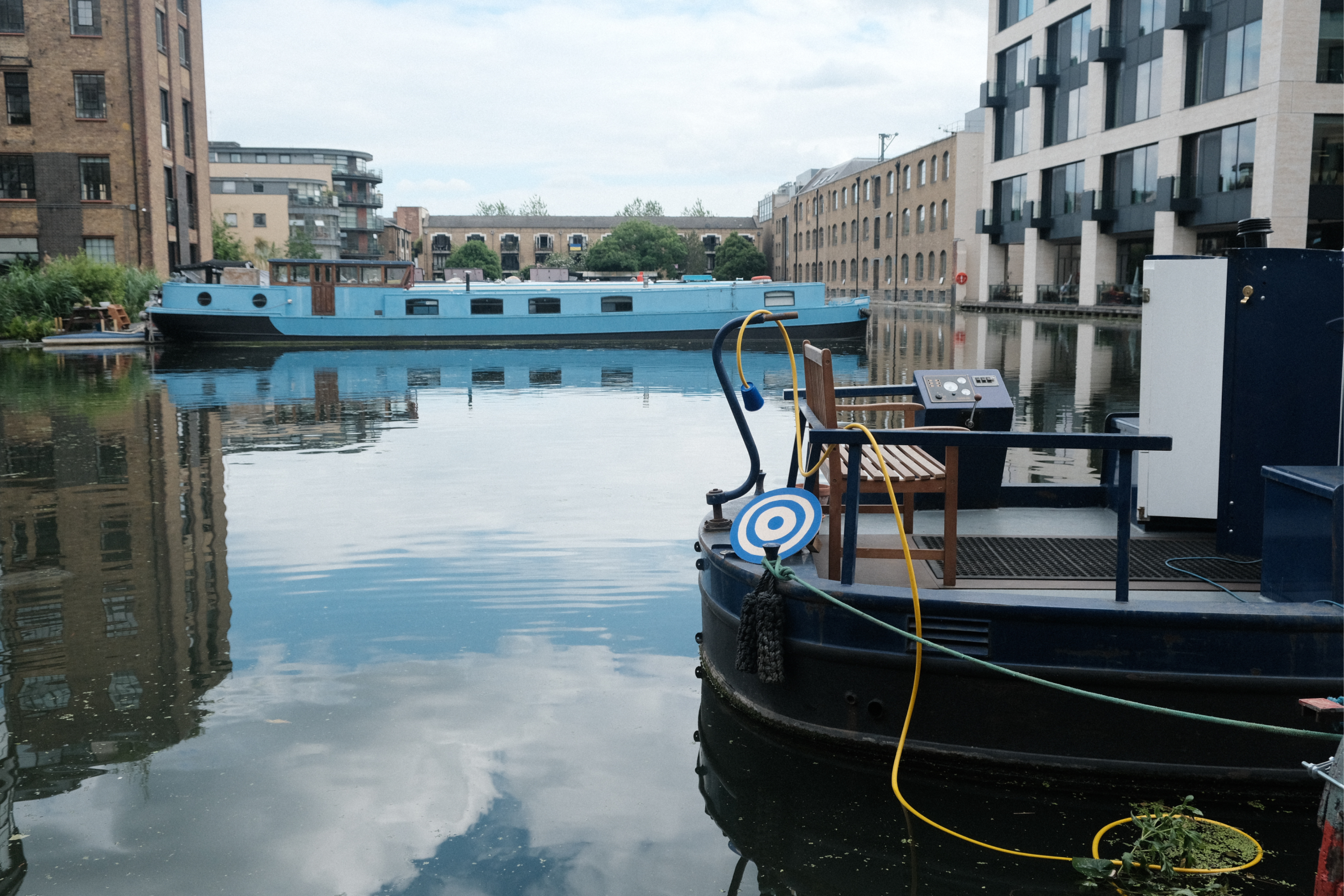
Based on feedback, we developed five play interactions: a cup telephone from our experiments that connects the riverbanks; a bridge children can quickly assemble; a reinterpretation of the familiar seesaw; a water-gun competition that introduces an element of risk; and a “River Telephone” that draws people from farther away to the new playground. A conventional seesaw requires two people. In our Water Seesaw, the river replaces one of the play partners. The interaction builds on people’s existing understanding of a seesaw, allowing them to discover how it works without explicit instructions. The water-gun competition follows the same principle, using familiar actions to make the experience intuitive.
Open Events
We have a total of two public events in London in 2023, which are invaluable opportunities for us to bring our programmes into the real world and interact with children. We received a lot of positive feedback and valuable suggestions during this time.
Refection
We consider children's play through a new lens, that treats play as a serious matter. Our project supports children's primal urges and brings them closer to and interacts with the river, and we hope that this project will inspire people to better incorporate nature as a rewarding and interactive element in children's play. And for designers, we need to balance the risks and challenges within children’s play. During the research, we spent a lot of time observing and interviewing in local parks. Through this project we were able to get closer to the locals and talk more with children, parents and people who care about nature. Although it is designed as an experimental playground but through this kind of research it makes our design more practical and acceptable for all.